

Can you believe we’re already halfway through 2026?
Between the World Cup wrapping up, summer heat rolling in, and everyone squeezing in vacations before the kids go back to school, it’s easy to lose track of what’s been happening in the markets. So I wanted to catch you up because the story so far this year isn’t the one most people expected.
Let’s Get Started
You’ve probably heard a lot about the “Mag 7”, Apple, Nvidia, Tesla, and the rest, driving the market for years. Well, this year they’re actually the ones lagging behind… surprised so am I.
Meanwhile the other 493 companies in the S&P 500 have been quietly doing the heavy lifting. It’s a good reminder that markets have a way of humbling whatever everyone’s sure will keep happening. Add in a surprise run from industrials, energy, and materials, emerging markets having a great year, and an economy that just refuses to slow down no matter what gets thrown at it and you’ve got a pretty interesting first half.
Here, take a look at this chart, it makes the point way better than I can with words.
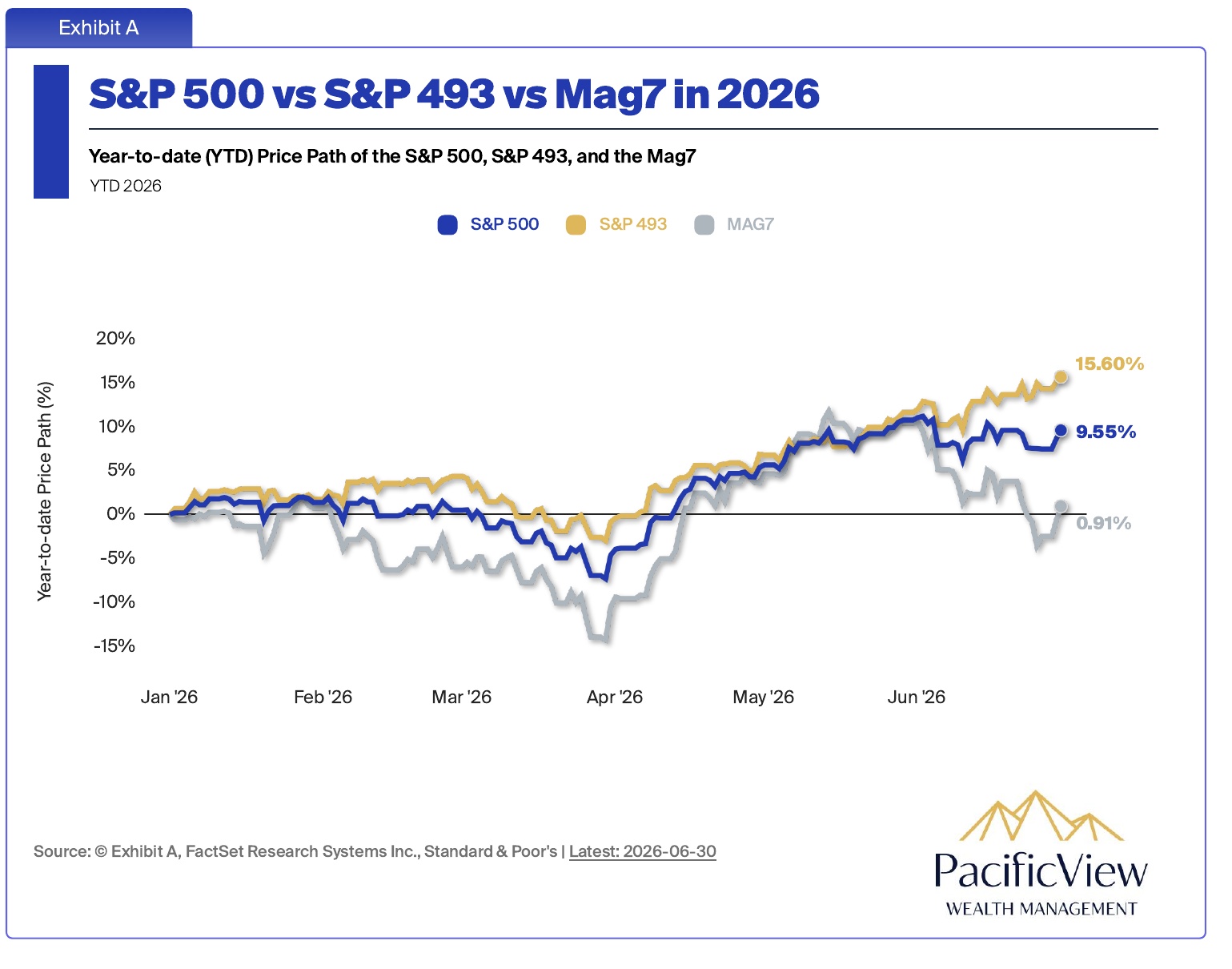
You can actually see the Mag 7 stumbling at points this year while everyone else just kept climbing. If you’d told me a few years ago that the “boring” 493 stocks would be beating Apple and Nvidia, I’m not sure I’d have believed you either.
There have been some unexpected winners this year
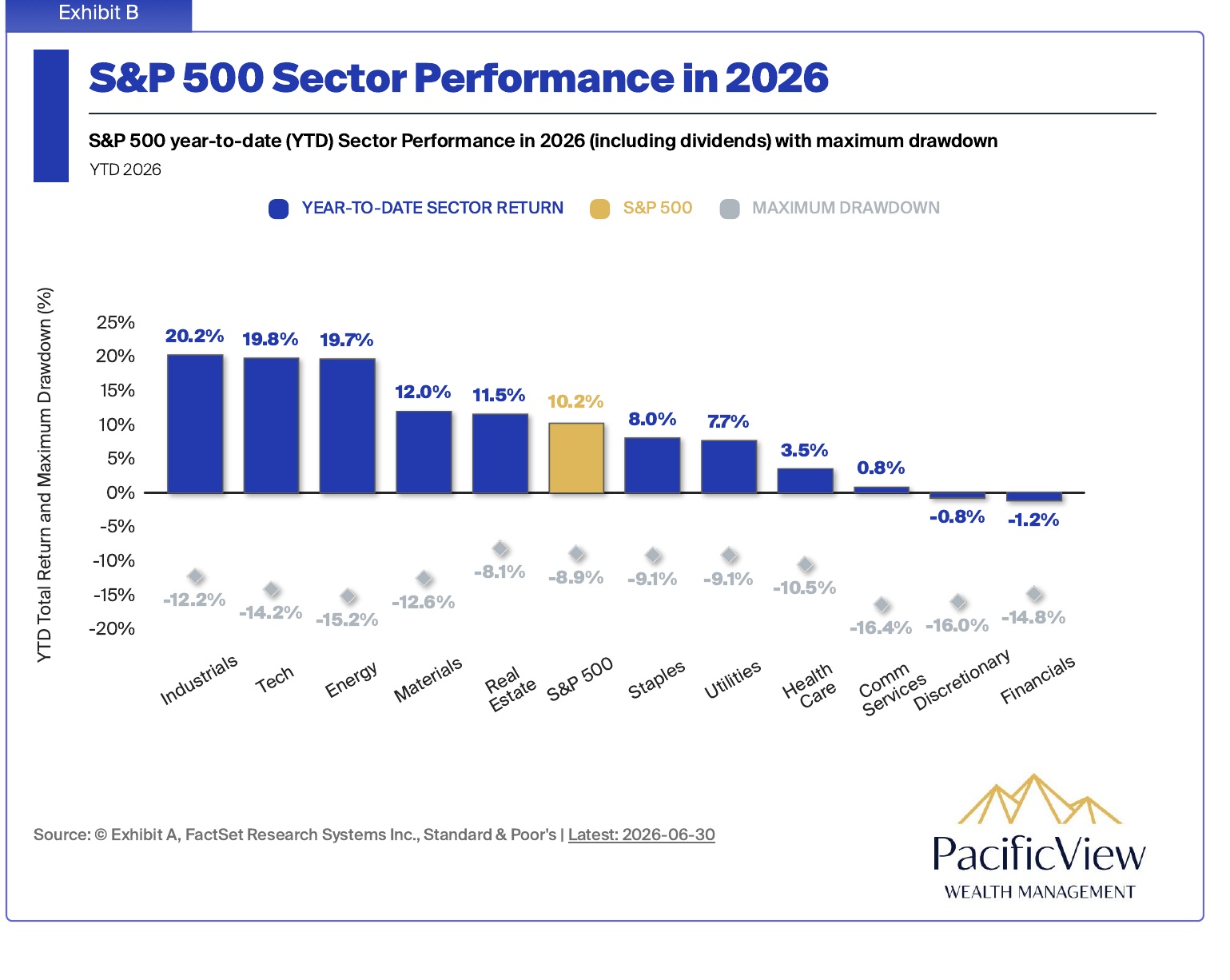
Tech stocks are having another great year which shouldn’t be a surprise given the AI landscape. What is surprising is that the other sector leaders for the S&P 500 in 2026 are industrials, energy, materials, and real estate.
It’s also interesting to note that each of the four top performing sectors this year are up double-digits but also experienced a double-digit drawdown along the way. This has been a strong year for stocks, but there has been some volatility to earn those returns.
Earnings have driven the stock market
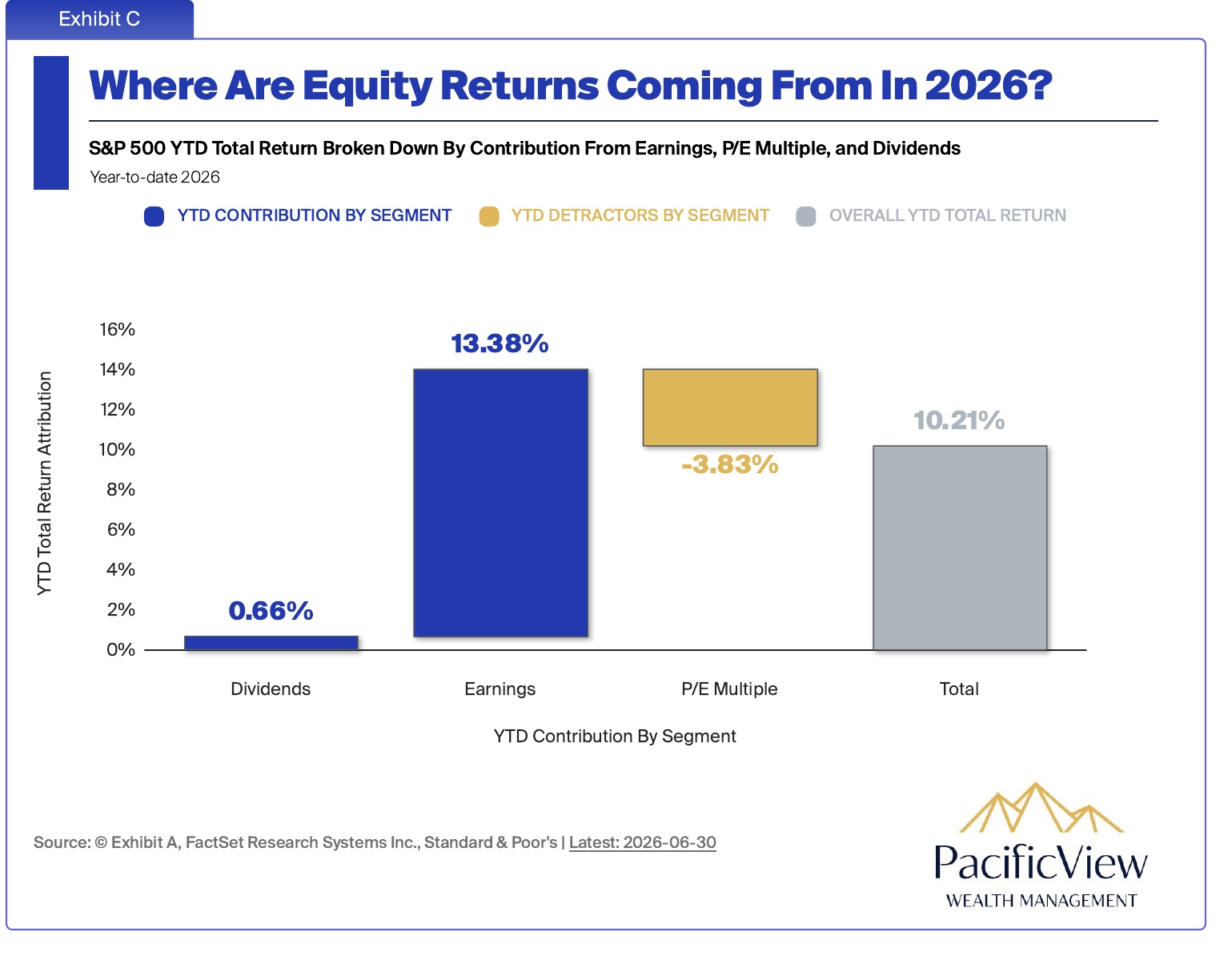
Jack Bogle had a formula for calculating expected stock market returns that looks like this:
Stock market returns = dividend yield + earnings +/- the change in PE ratio.The fundamentals (dividends and earnings) tend to matter much more over the long run while valuations often say more about how investors are feeling about the current market environment. What’s interesting about the returns in 2026 is that fundamentals are so strong that valuations have actually fallen!
Earnings growth has continued to be the engine for stock market returns this year.
Emerging markets have benefited from the AI trade
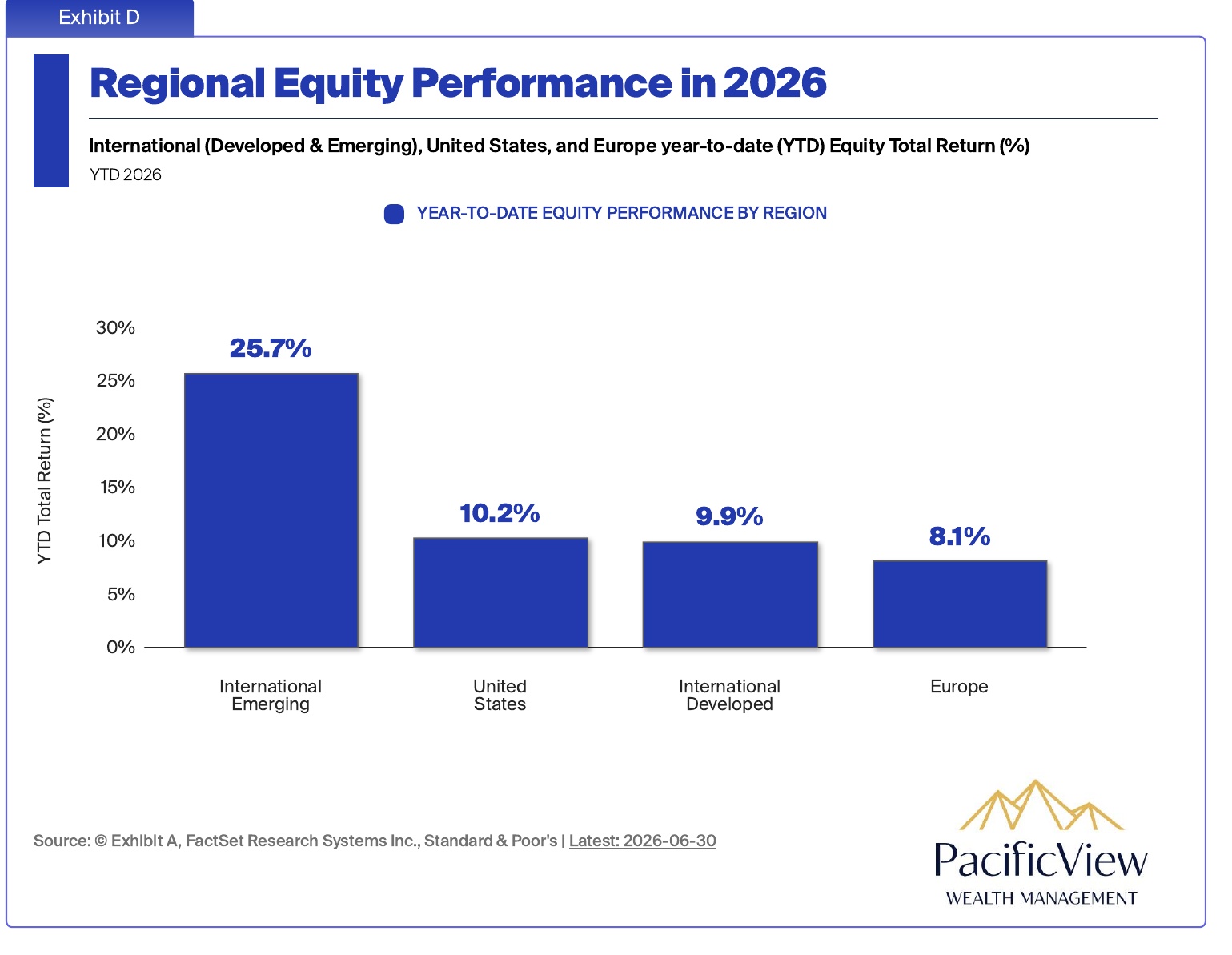
One of the biggest reasons the U.S. stock market outperformed the rest of the world for more than a decade is that U.S. markets have carried some of the most important technology companies. Most other countries didn’t have tech stocks that could keep up.
That trend has been changing in recent years and emerging markets are the beneficiaries. Countries like Taiwan and South Korea have been among the biggest winners from the semiconductor boom caused by all of the AI capex and memory demand.
Emerging markets outperformed by a wide margin in 2025. They are out performing by an even wider margin so far in 2026. One of the potential benefits of diversification is that the winners can come from unexpected places.
The U.S. economy has been resilient
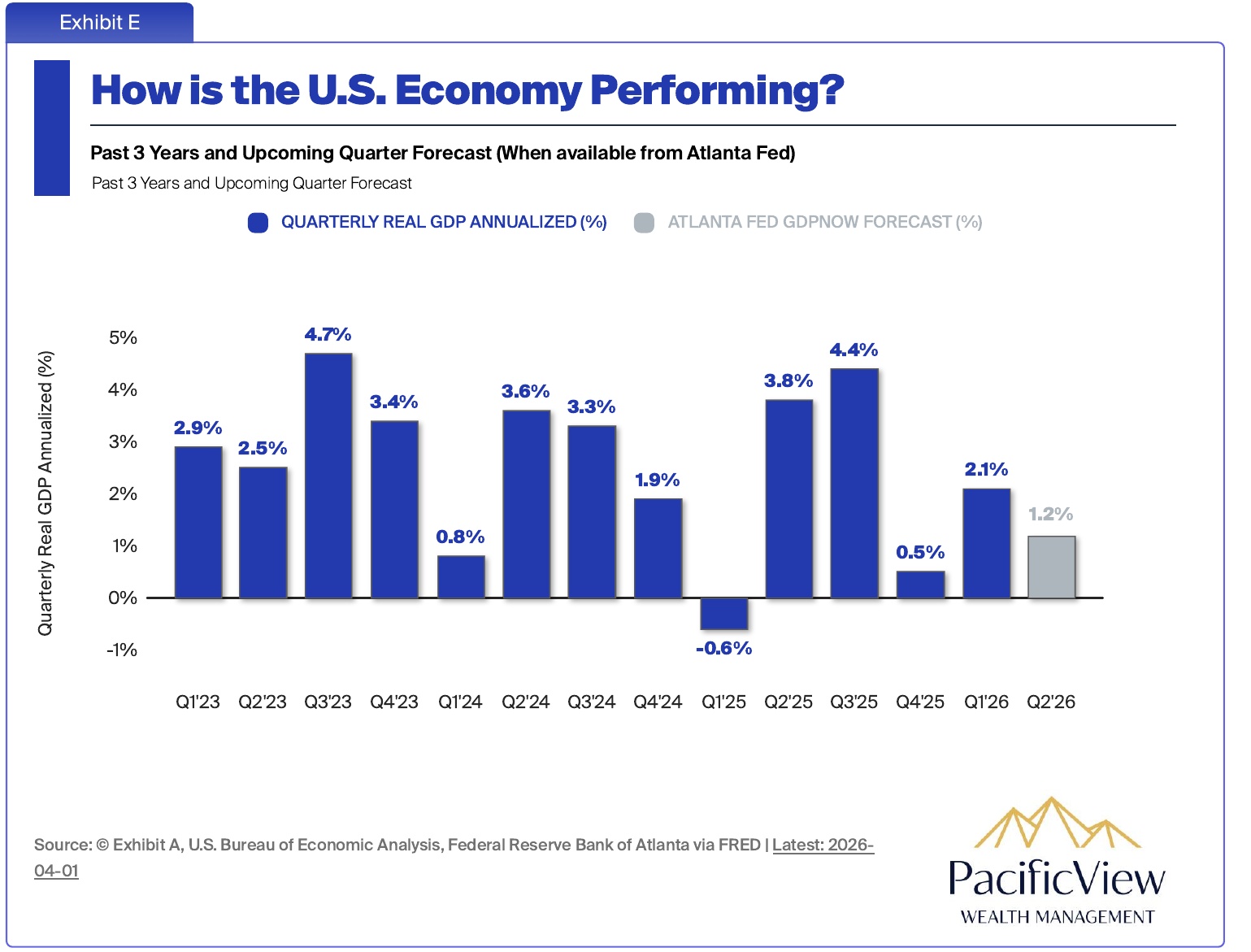
There has been a lot thrown at the U.S. economy in the 2020s. Here are some examples: the pandemic, supply chain shocks, 9% inflation, an aggressive Federal Reserve hiking cycle, tariffs, and two wars that caused energy prices to move substantially higher. And yet the economy continues to expand in the face of every challenge. There have been slowdowns but every time the economy has bounced back.
So far in 2026 the economy is still producing positive real GDP growth. Despite all of the recession calls the U.S. economy marches higher.
Job losses are still low despite AI concerns
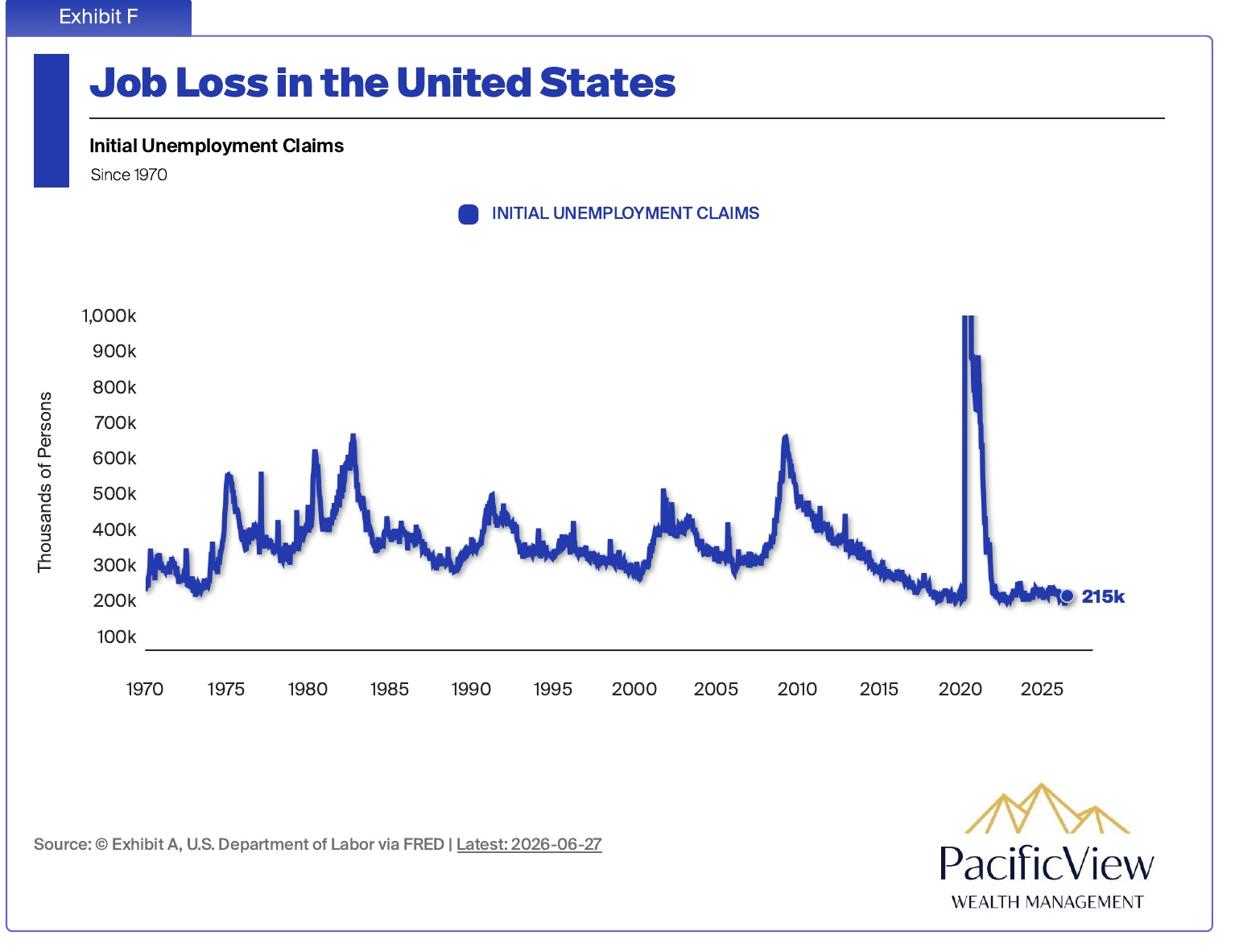
One of the big reasons the economy has remained so resilient is because most people are still employed. The consumer makes up around 70% of the economy and as long as people have jobs, they are willing to spend money. There are many worries about the impact of AI on the labor market in the years to come. It’s possible those concerns will be valid in the future, but they’re not showing up in the economic data just yet.
The U.S. unemployment rate is still 4.2%. Initial unemployment claims are still very low. In fact,during the 1990s economic boom times, initial unemployment claims never once got as low as they are today.
As long as job losses stay low, the economy has the potential to keep growing.
Inflation expectations remain muted
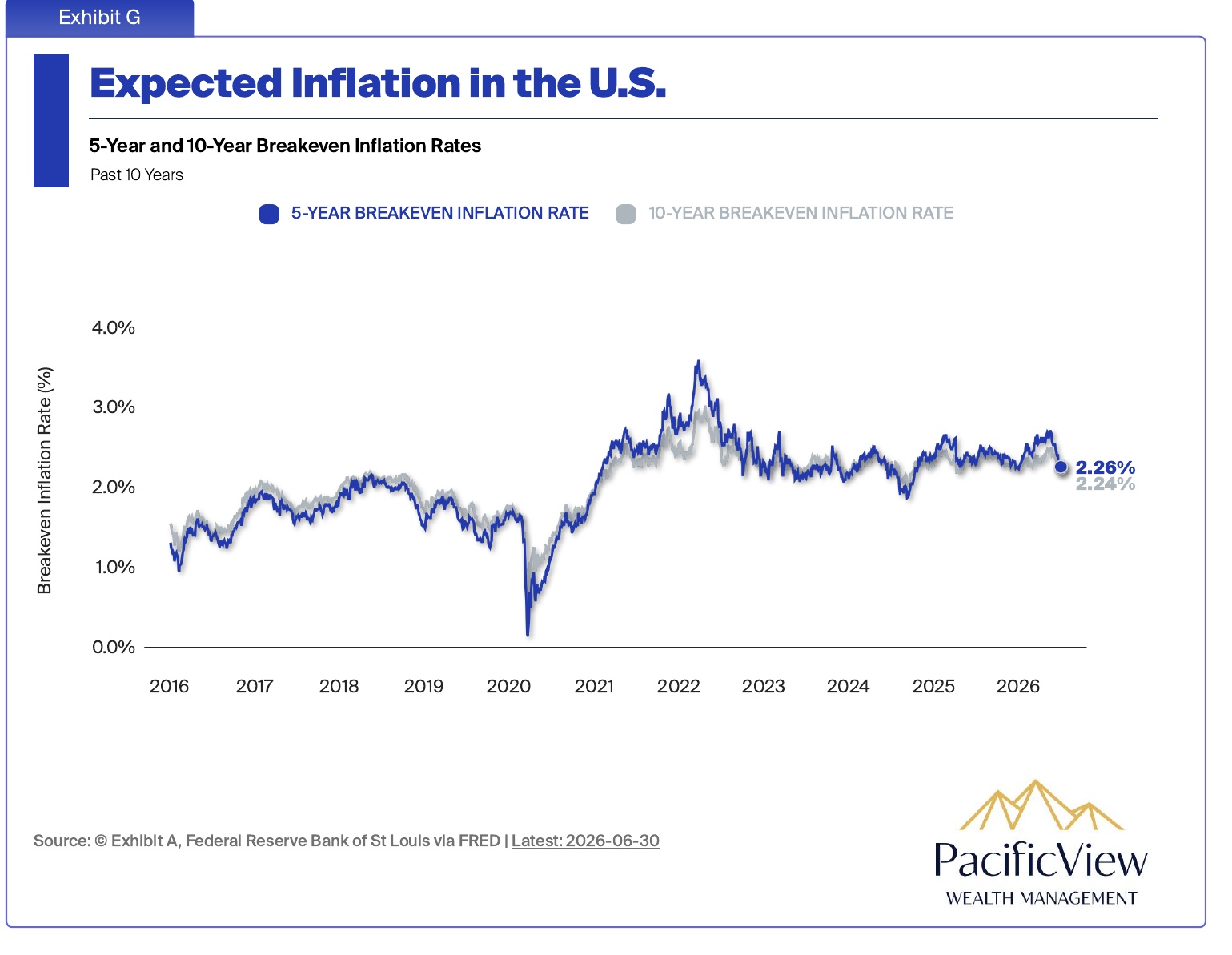
Inflation rose back to 4.2% in May due to some combination of the war in Iran, spiking energy prices, and a resilient U.S. economy.
The stock market took the higher inflation reading in stride,however, as there wasn’t much of a market reaction to the news. Bond yields have been steady over the past three months as well. The chart below shows both 5-year and 10-year inflation breakeven rates falling recently which may be the market’s way of pricing in a more transitory outcome for inflation versus a longer, persistent inflationary cycle.
The Bottom Line
June’s update is a good reminder that markets rarely move in a straight line, and rarely in the direction the headlines suggest.
Broadening leadership beyond the Mag 7, resilient earnings, a labor market still holding steady, and inflation expectations staying in check these are the forces that matter far more over time than any single month’s noise. A thoughtful financial plan is what keeps all of these moving pieces in perspective.
As always, if you have any questions about the markets or your financial plan, please don’t hesitate to reach out.