
Markets continued their impressive rebound in May, extending a rally that has surprised many investors after the volatility experienced earlier this year.
While headlines have focused on everything from artificial intelligence to the highly anticipated SpaceX IPO, the real story behind the market’s strength has been something far more fundamental: corporate earnings.
Let’s Get Started
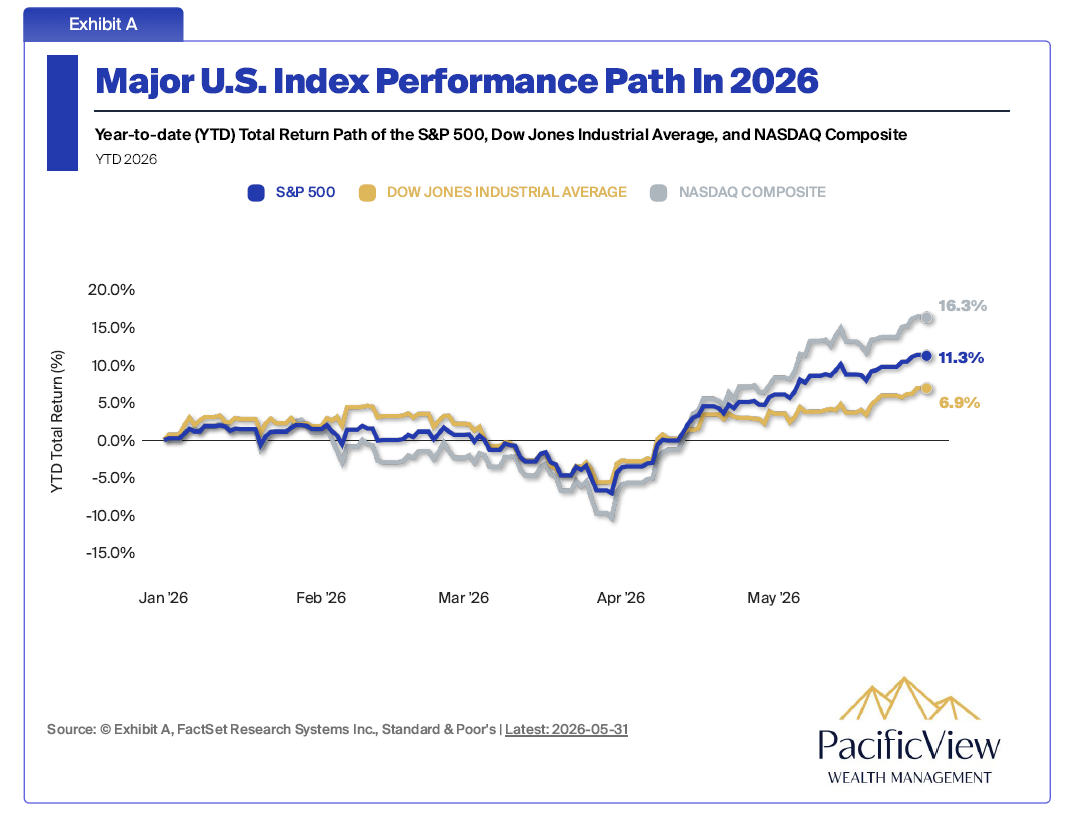
To see how quickly market sentiment has shifted, it helps to look back at where things stood just a few months ago. During the correction in March, the Nasdaq Composite was down nearly 10% on the year, underperforming both the S&P 500 and Dow Jones Industrial Average at the time.
Fast forward a couple of months later and the Nasdaq has gone from double-digit losses on the year to double-digit gains. It’s also now handily outpacing the S&P 500 and Dow. Markets have continued to move fast in both directions.
Fundamentals Have Driven The Stock Market
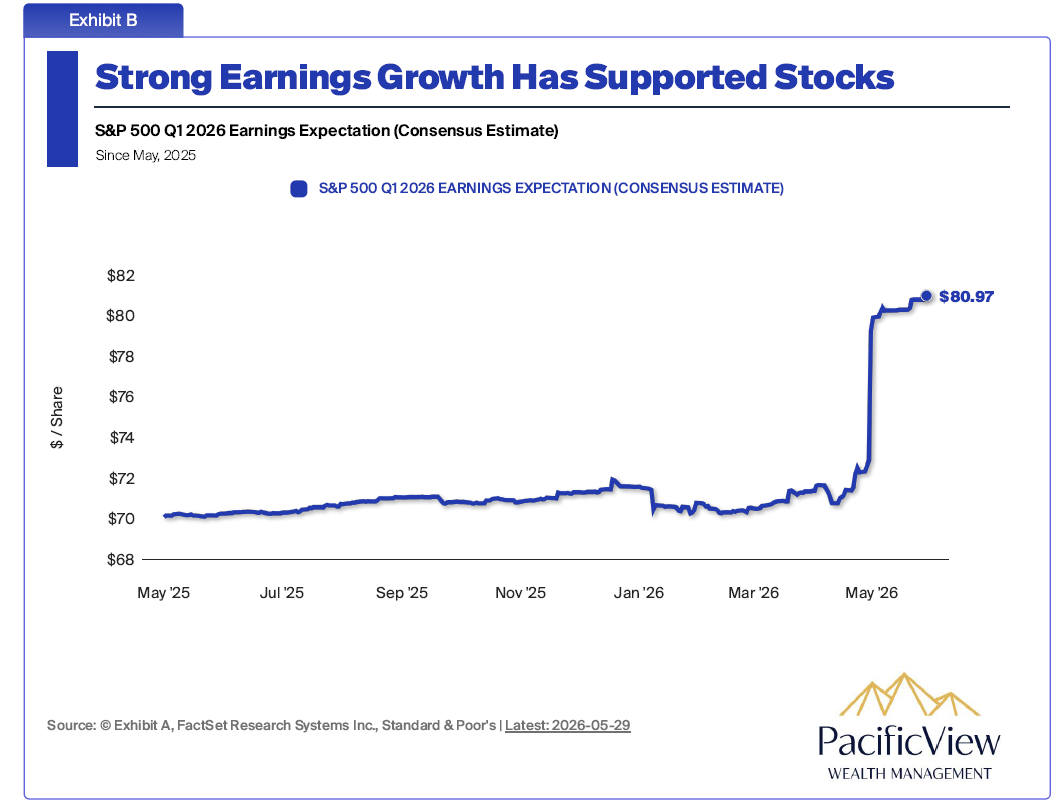
In 2025, emerging market stocks outperformed the U.S. stock market by more than 16%. There have been a number of head-fake rallies by international stock markets during this cycle so many investors were unsure if this was a blip or the start of a sustained rally. So far, 2026 is seeing follow-through from last year’s outperformance.
No one knows if this will continue but the good news for emerging market investors is that valuations in those countries still trade at a discount to the United States.
Emerging Markets Have Continued To Outperform
Jack Bogle had a formula for calculating expected stock market returns that looks like this:
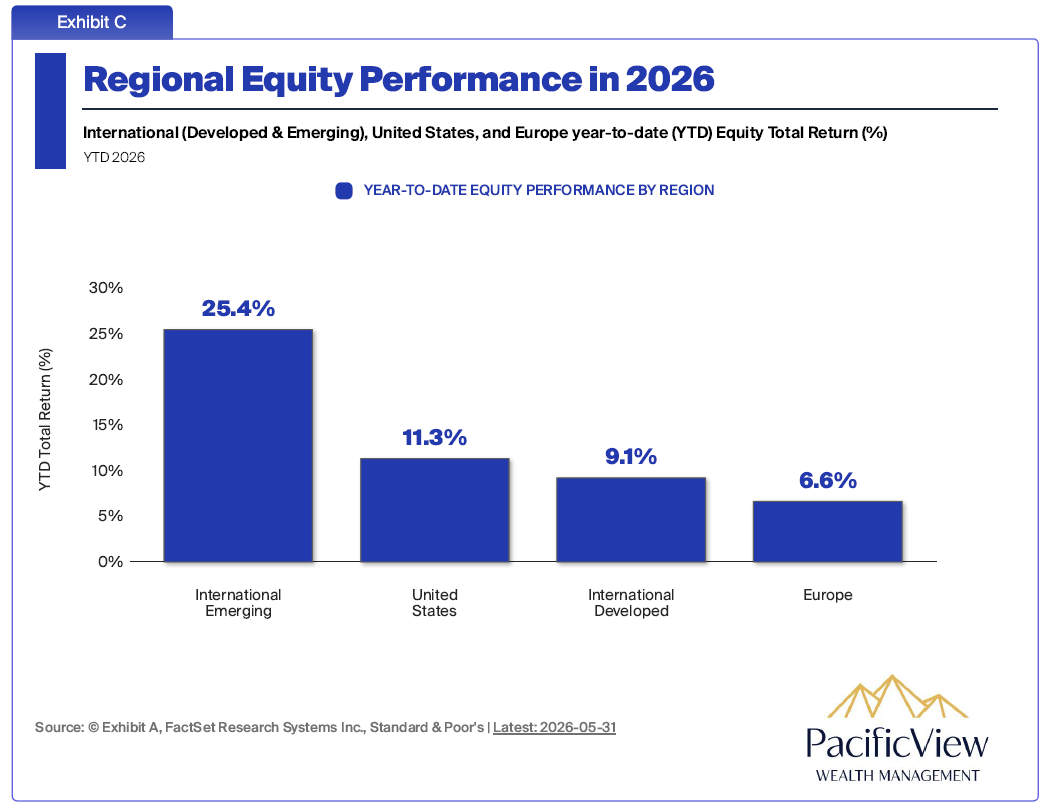
Stock market returns = dividend yield + earnings +/- the change in PE ratio.The fundamentals (dividends and earnings) tend to matter much more over the long run while valuations often say more about how investors are feeling about the current market environment. What’s interesting about the returns in 2026 is that fundamentals are so strong that valuations have actually fallen!
Earnings growth has continued to be the engine for stock market returns this year.
Investing in IPOs
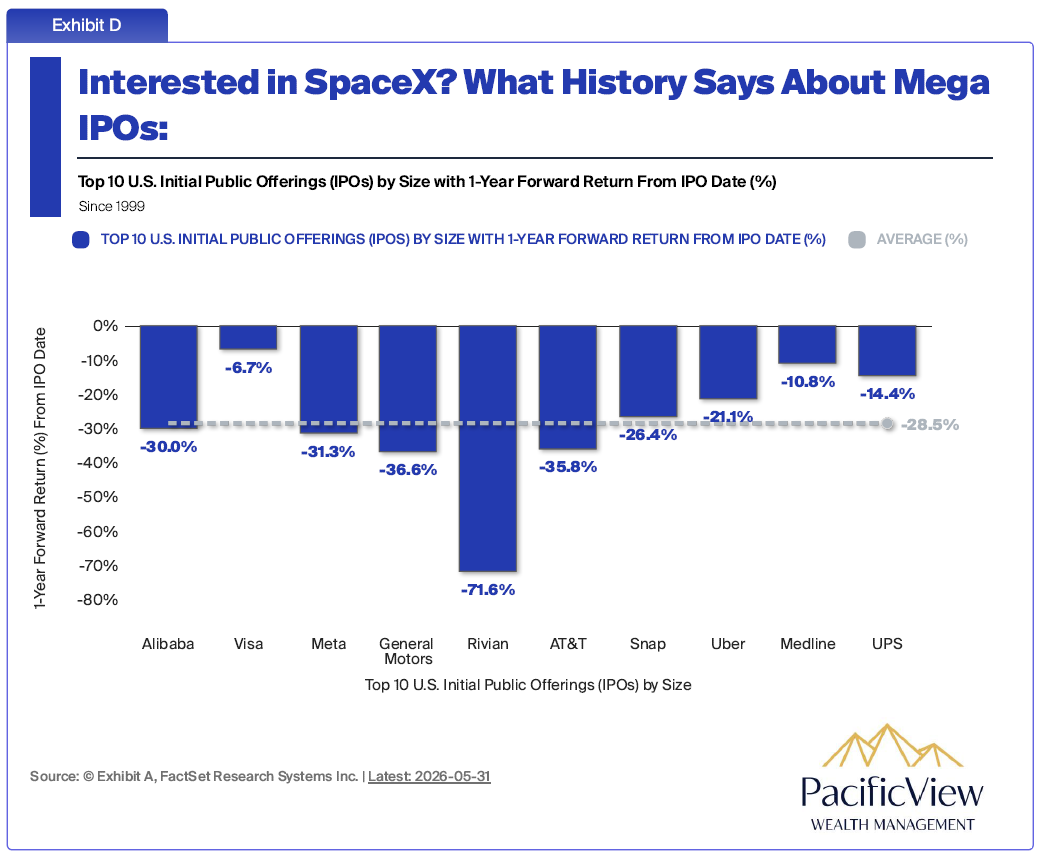
Initial public offerings can garner a lot of attention from the financial media. SpaceX will be one of the biggest IPOs of all time. It’s far too early to know if SpaceX will be successful as a public company, but we can look at the history of large IPOs to get a sense of how they perform. This chart shows the initial 12-month performance of the 10 biggest IPOs in the U.S. stock market since 1999. The results haven’t been great with an average loss of 28.5%.
It’s possible SpaceX will buck this trend but it’s helpful to go into these kinds of investments with your eyes wide open and your expectations in check.
AI Has Not Killed Jobs
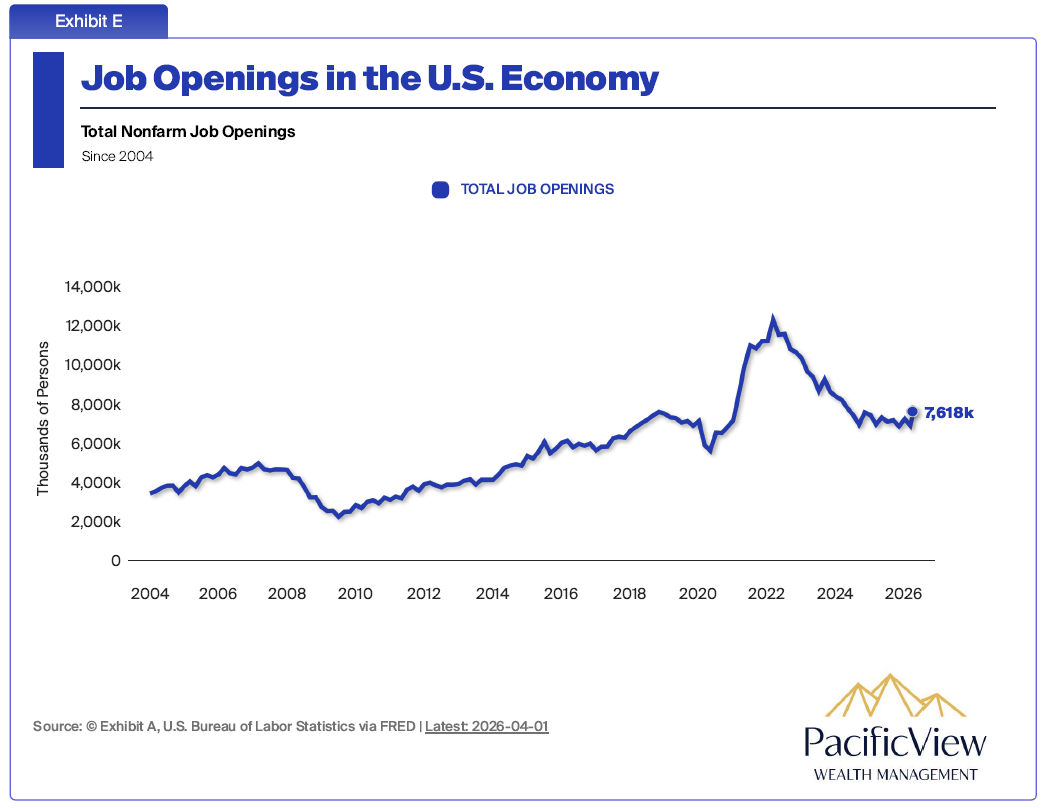
There has been a lot of worry from white collar workers about the impact of AI on the labor market. It’s possible AI will eliminate jobs in the future, but it’s not showing up in the aggregate data just yet. The number of job openings in the United States actually increased from just shy of 6.9 million in March to more than 7.6 million in April.
This could all change someday, but the evidence for AI as a job-destroyer is not showing up in the present data just yet.
Wage Growth & Inflation
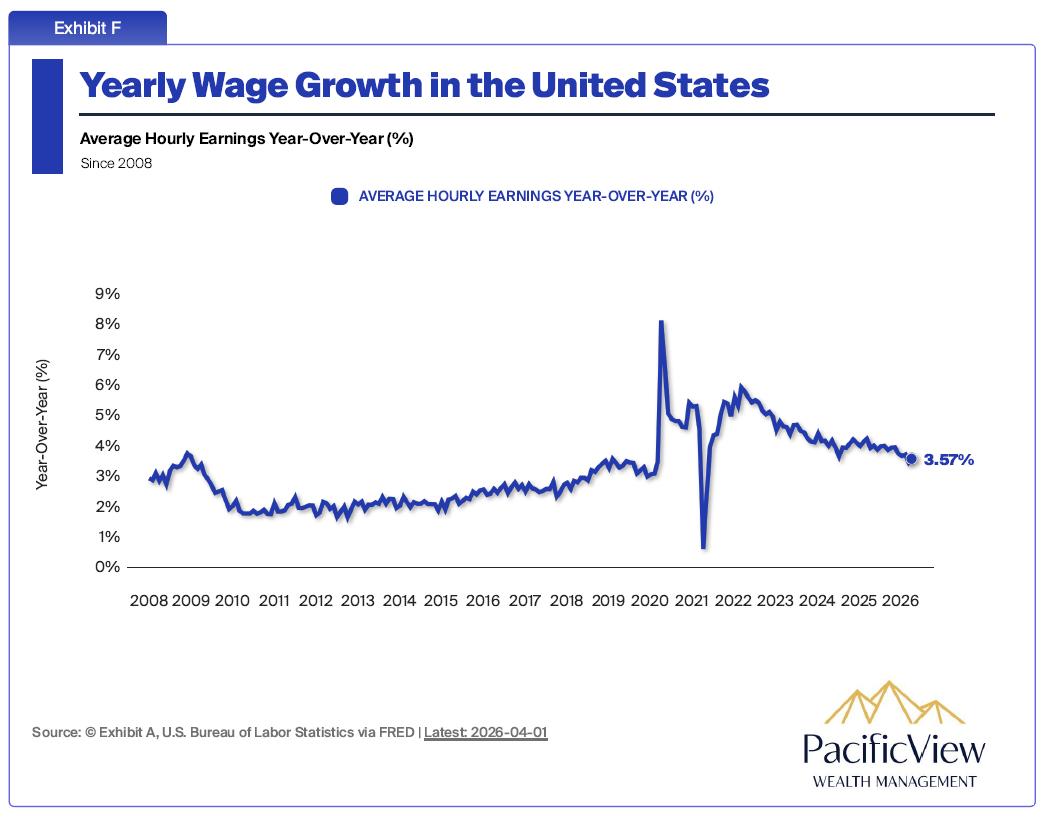
Wage growth and inflation tend to go hand-in-hand. After all, one person’s spending is another person’s income. In the 2010s, inflation and wage growth were both subdued.
That’s all changed in the 2020s as we’ve moved from a world of 2% inflation to 3% inflation. Wage growth has also been much higher in the 2020s because of this.
It’s important to remember that geopolitical events like the war in Iran can have a short-term impact on prices but wages are the key driver of longer-term inflation trends.
Inflation expectations remain muted
Inflation rose back to 4.2% in May due to some combination of the war in Iran, spiking energy prices, and a resilient U.S. economy.
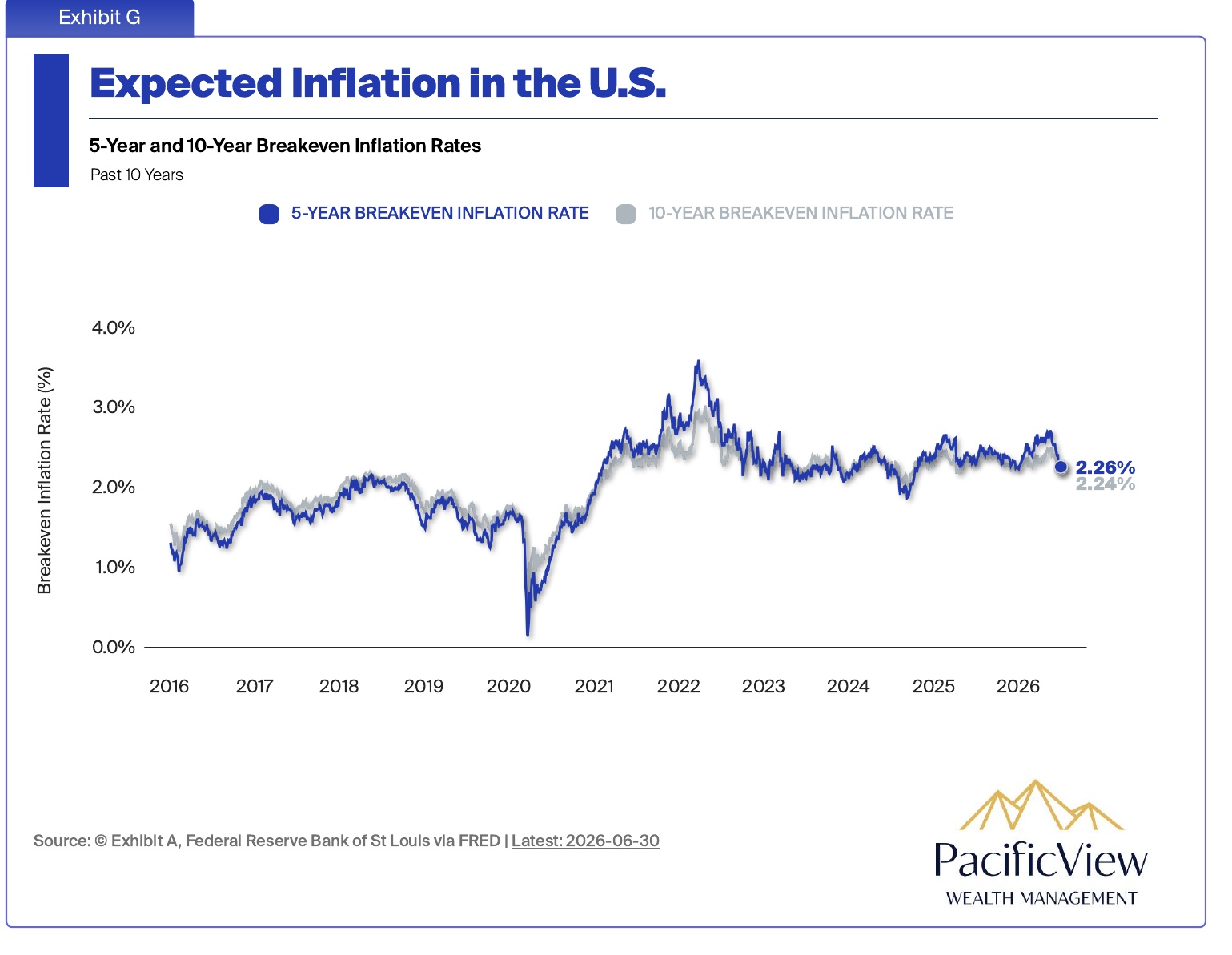
The stock market took the higher inflation reading in stride,however, as there wasn’t much of a market reaction to the news. Bond yields have been steady over the past three months as well. The chart below shows both 5-year and 10-year inflation breakeven rates falling recently which may be the market’s way of pricing in a more transitory outcome for inflation versus a longer, persistent inflationary cycle.
This Is Why We Invest
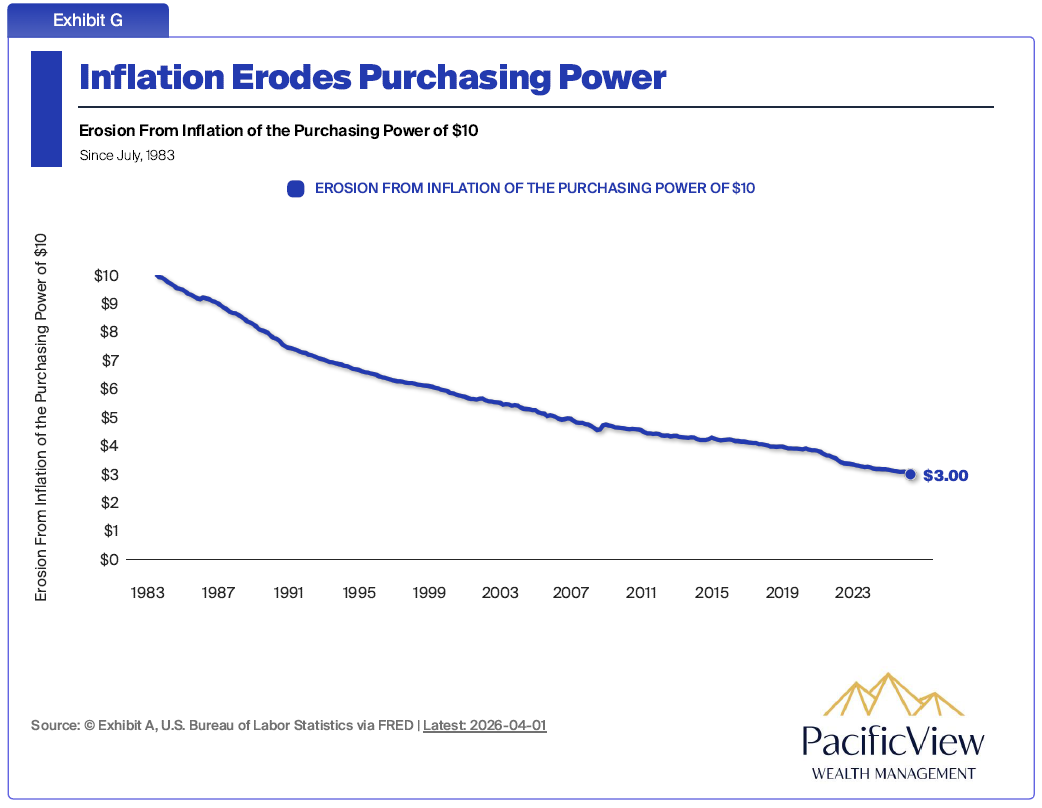
No one knows what the inflation rate will be in the future but as long as the economy continues to grow and the government continues to borrow money, prices have the potential to keep rising. Since 1983, $10 buried under your mattress would now be worth just $3 in terms of purchasing power.
This is why investing is so important. Over the long-run, it is one of the best ways to maintain solid financial footing as the purchasing power of dollars today become worth less tomorrow.
The Bottom Line
May’s update highlights the importance of looking beyond short-term headlines and focusing on the forces that drive long-term financial outcomes. Markets, earnings, inflation, and major IPOs will all continue to evolve, but a thoughtful plan helps keep each of these pieces in perspective.
As always, if you have any questions about the markets or your financial plan, please don’t hesitate to reach out.