

As we move through 2026, it’s natural to feel a bit uneasy when headlines and market movements don’t seem to align.
Recently, we’ve seen stock prices pull back, yet many of the underlying fundamentals remain strong. So what’s really going on?
Let’s take a step back and walk through the bigger picture together.
Where Are Equity Returns Coming From in 2026?
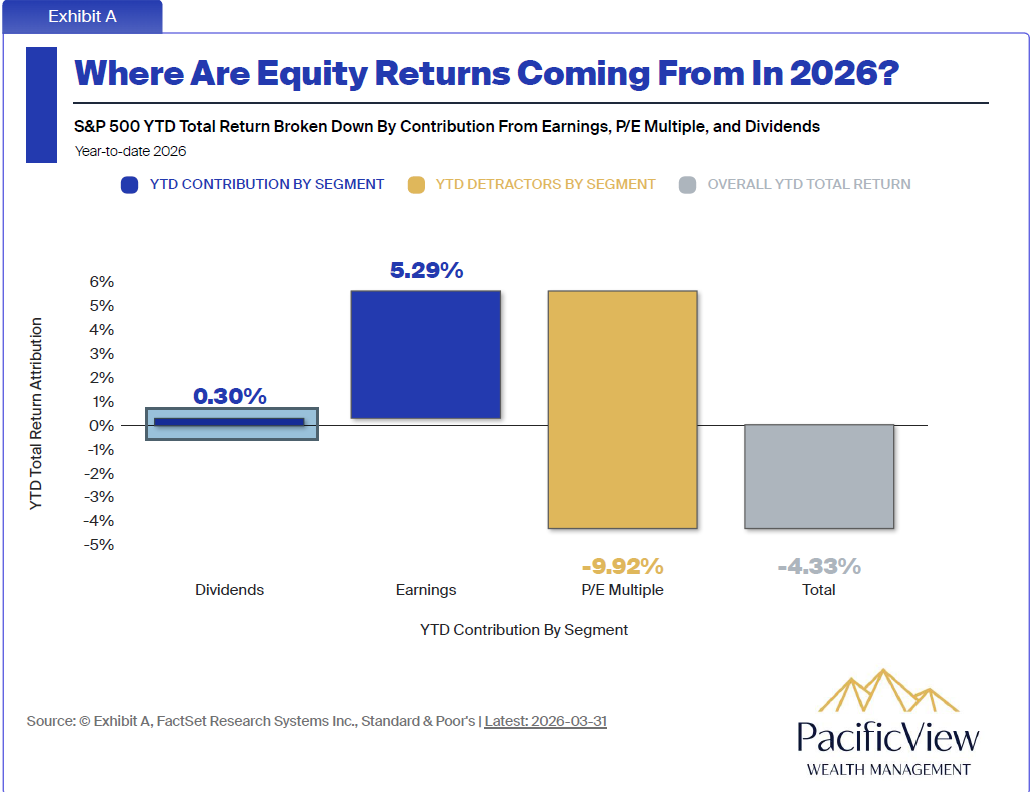
Year-to-date, company earnings have actually grown, yet the broader market has declined. This may sound confusing at first, but the key driver has been something called valuation compression—essentially, investors are becoming more cautious and are willing to pay slightly less for those same earnings.
January, through the end of March, earnings have grown 5.52% while the S&P 500 has fallen-4.33%. This means the entire decline in the stock market has been caused by multiplecompression. It’s important to remember that while stock prices and earnings tend to move in thesame direction over the long run, they can diverge in the short run when investors become nervous.
The Impact of “Magnificient 7”
A key driver of recent performance has been the outsized influence of a small group of large-cap technology companies.
As shown below , the “Magnificent 7” have accounted for a significant portion of the market’s decline in 2026.
The chart below shows the outsized impact of the Mag 7 on S&P 500 returns this year. However, italso highlights how the other 493 stocks have helped soften the blow.
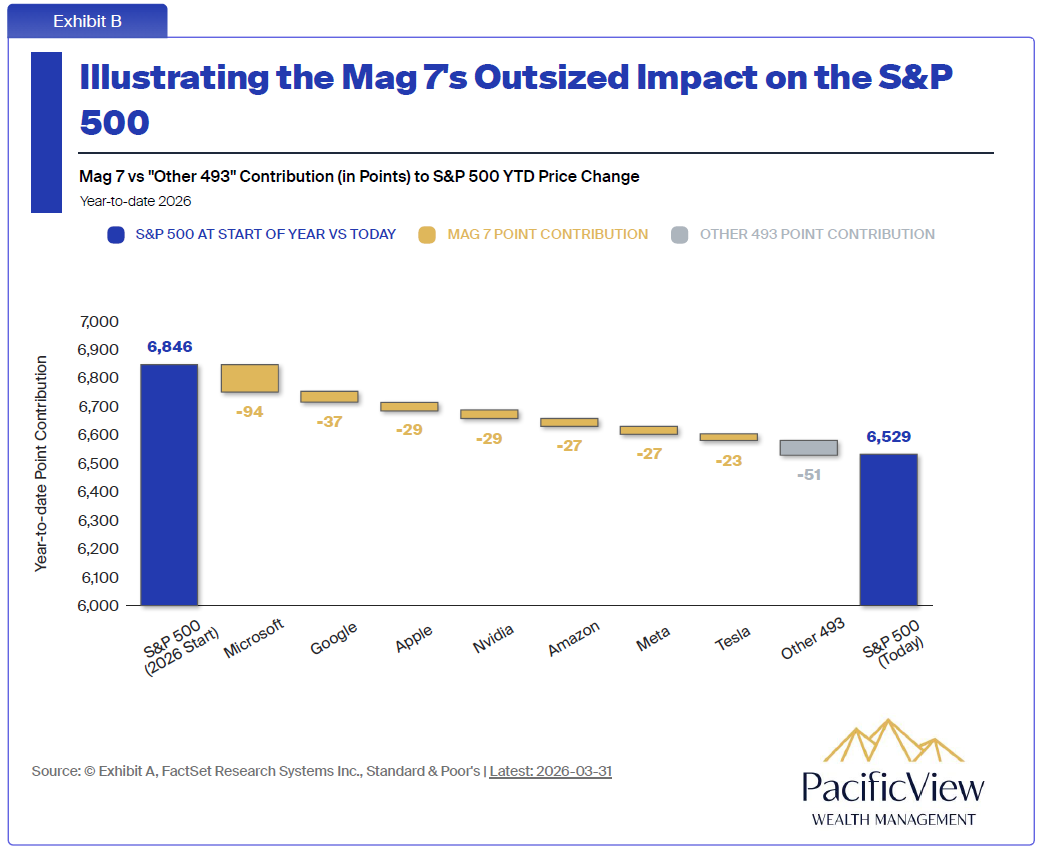
The U.S. stock market has become more concentrated but diversification within the index is still having an impact. If the Mag 7 continue their descent the stock market will almost surely go down but it’s nice to see other areas of the market picking up the slack.
The U.S Has Continued to Lag International Markets
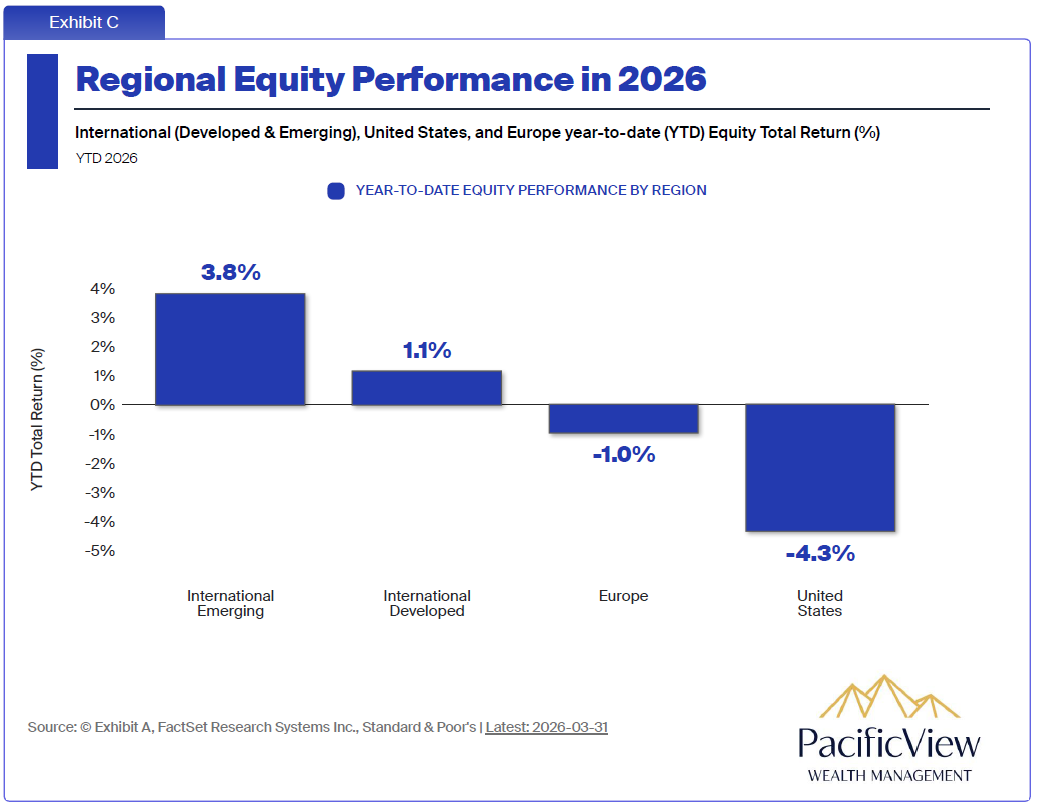
Another notable trend this year is the relative strength of global markets.
Emerging markets and foreign developed stocks are still outperforming the United States in 2026, following through on outperformance in 2025. In the past two years, foreign stocks have provided a good reminder that geographical diversification could still help investors.
With all of the uncertainty happening in geopolitics right now, diversification may be a logical framework in an unpredictable world.
What Oil Shocks Have Meant For Stocks
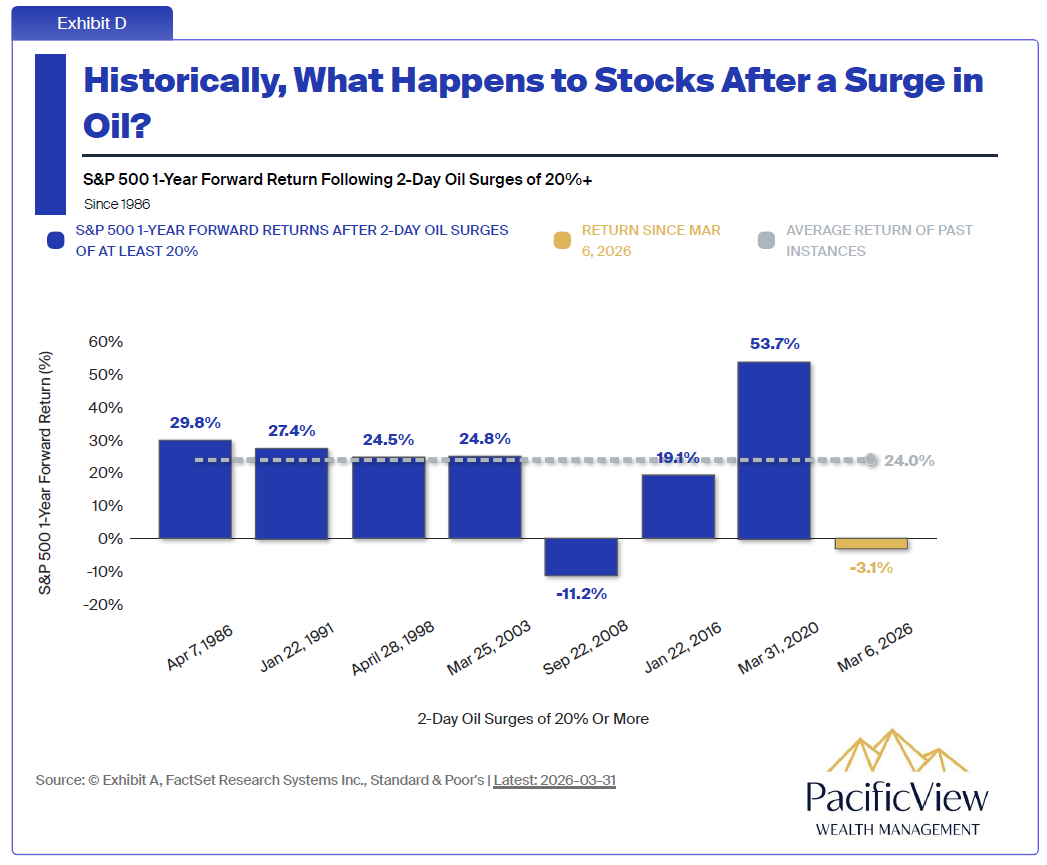
Oil is in the headlines every day now so it’s fair to ask what the impact of a price spike means forthe stock market.
If you look at the history of big run ups in price over a short period in that past 40 years, the stockmarket tends to look past these flare-ups. Most of the time the stock market is up in the 12months following a big jump in the price of oil but not always.
This time likely depends on how quickly the conflict is resolved and how long it takes for supply &demand dynamics to return to normal.
Unemployment Rate Still Sub 5%
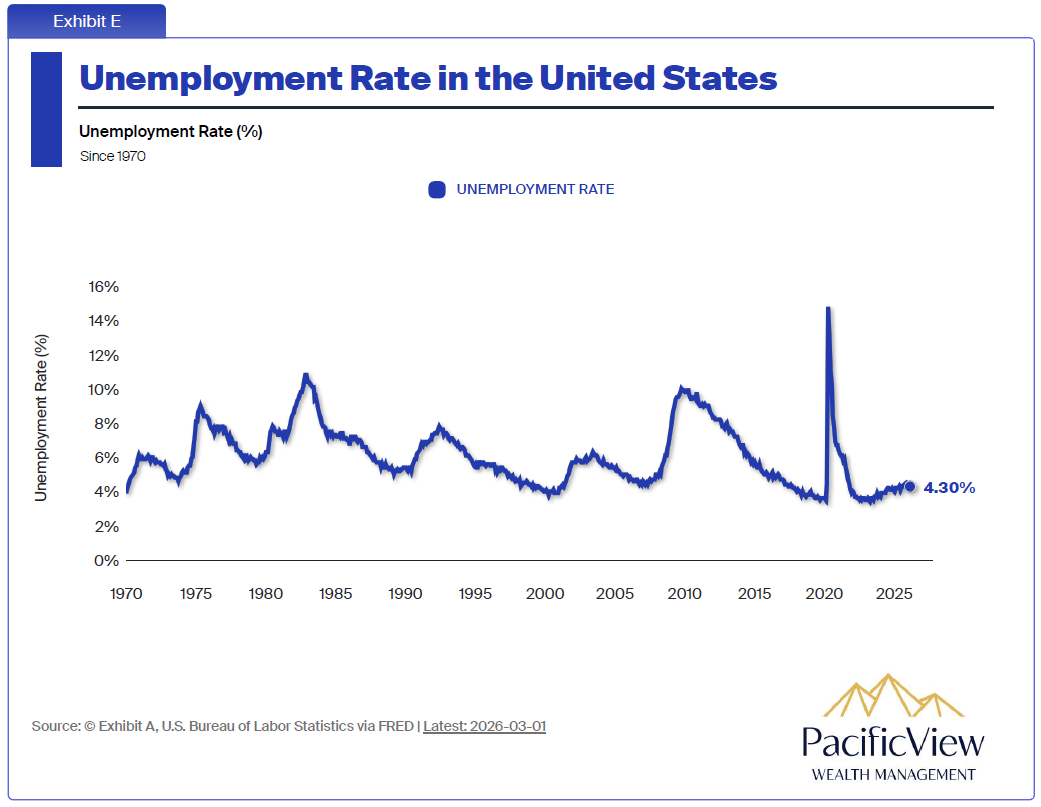
There are legitimate fears that AI is going to cause a severe disruption to the labor market but it’snot showing up in the data just yet.
The unemployment rate is still sub-5% and outside the Covid blip has been less than 5% sincethe end of 2015. It’s worth noting that the unemployment rate has moved slightly higher in recentmonths but remains low by historical standards. Will it stick? It depends on AI’s actual impact andthe economic cycle.
The good news is that as long as households remain employed they tend to spend money.
Where is Inflation Today?
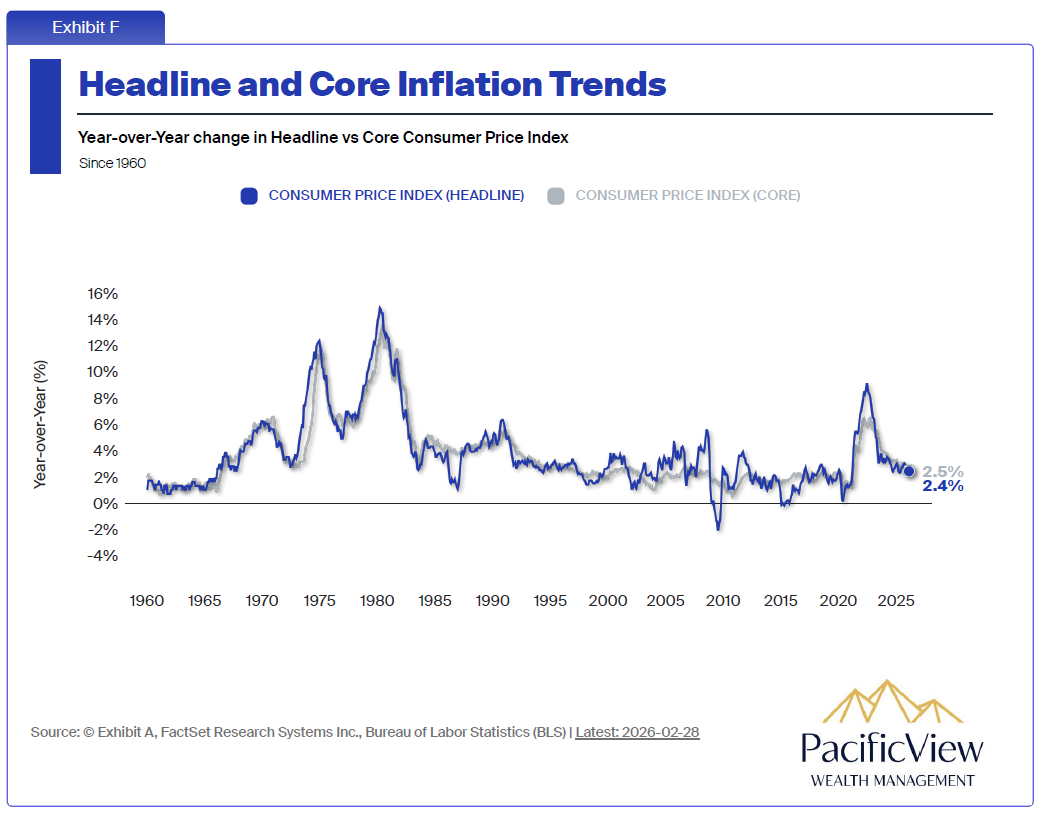
The war in Iran and oil price spike have caused worries about the potential for higher inflation but we have to wait to see if it shows up in the actual data. CPI is still in a pretty good place all things considered. Geopolitics and high government debt levels are inflationary but that’s in competition with the deflationary force that is technological innovation.
It seems like the stock market is reckoning with these competing forces as well. In 2025, AI spend appeared to trump the tariffs. One of the big questions in 2026 is whether AI will be a strong enough force to offset the war in Iran and its after-effects.
Drawdowns are Historically Normal
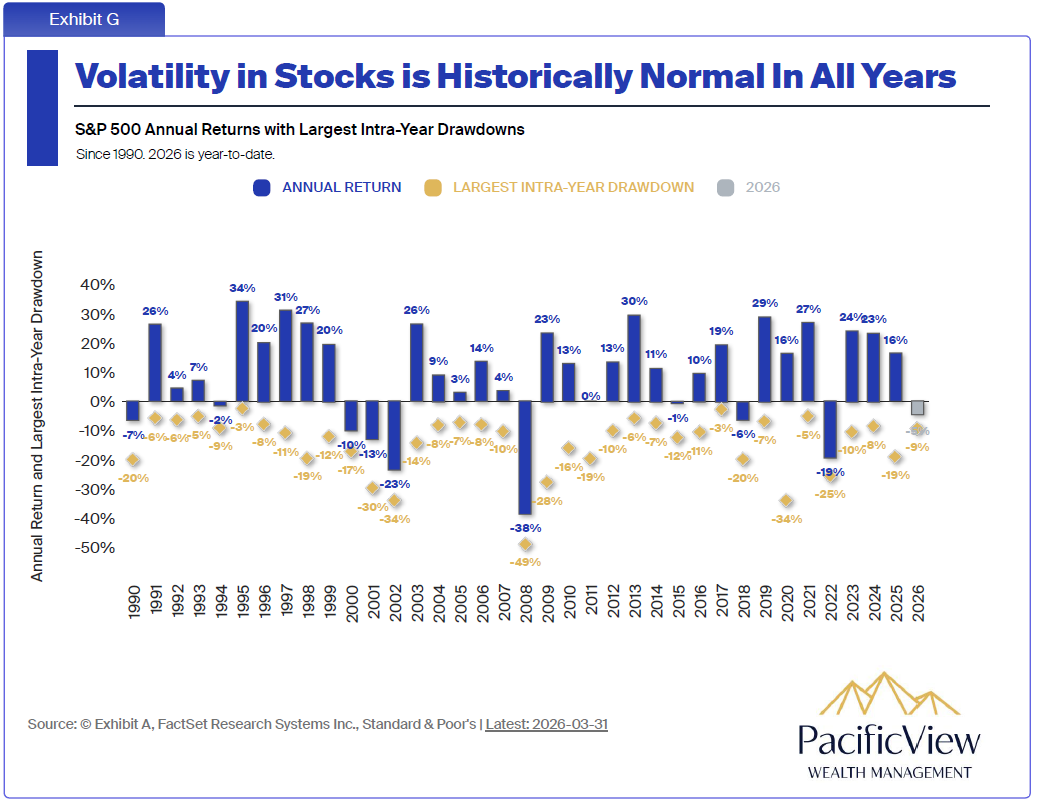
You have to be willing to lose money in stocks in the short-run to make money in the long-run. This is true even over 12-month periods. In 2020, 2023 and 2025 the stock market finished the year with double-digit gains but experienced a double-digit correction along the way.
Even when the stock market finishes the year with a gain, there is often a drawdown on the path to those positive returns.
The average annual return since 1990 was 10.1% while the average intra-year draw downwas -14.1%. It’s impossible to predict what the returns will look like in the stock market in any given year but risk is essentially guaranteed. The stock market will go down, it’s just a question of the magnitude and timing of the pullback.
Our Perspective Moving Forward
While headlines may feel uncertain, the broader picture remains grounded in fundamentals:
-
Earnings growth continues
-
Labor markets remain strong
-
Diversification is working across regions
-
And volatility remains consistent with historical patterns
Markets rarely move in straight lines, but long-term outcomes have historically rewarded disciplined, patient investors.
If you have any questions about your portfolio or would like to discuss how current market conditions relate to your personal financial plan, we’re always here as a resource.
A steady approach, especially during periods like this, can make all the difference.